Nigel Osborne
Lifetime Achievement Award
Recipient: Nigel Osborne
Award Date: 2026
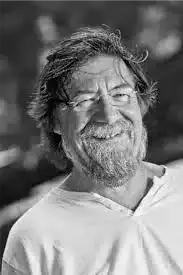
Nigel Osborne (b.1948) is a composer, teacher, health worker and aid worker. He studied composition at Oxford with Kenneth Leighton and Egon Wellesz, the first pupil of Arnold Schoenberg, and in Warsaw with Witold Rudzinski, and has worked in the Polish Radio Experimental Studio and at IRCAM in Paris.
His musical works have been performed by orchestras and opera houses around the world and he has received, among other awards, a Netherlands Gaudeamus Prize, the Opera Prize of the Radio Sussie Romande and Ville de Geneve, the Koussevitzky Award of the Library of Congress Washington and the British Academy of Songwriters and Composers Award (BASCA) for Inspiration. He is currently working on an opera co-created with migrant communities in Paris, in association with the Ensemble interContemporain and the Philharmonie, La Villette.
He has taught at every level of education, from nursery and special schools to teacher training and postdoctoral supervision, has held a lectureship and Special Professorship at Nottingham University, and served as Reid Professor and Dean of the Faculty of Music at Edinburgh University, Professor at the University of Hannover and Head of Faculty for the Vienna-Prague-Budapest Summer Academy.
He has pioneered methods of using music and the creative arts to support children and others who are victims of conflict. This approach is based on a bio-psycho-social model, very much inspired by psychobiologist Colwyn Trevarthen, and was developed during the war in Bosnia-Herzegovina (1992-95). Since then, the work has been applied widely in the Balkan region, the Caucasus, the Middle East, East Africa, South East Asia and most recently (2022-) in Ukraine – where it is implemented in children’s shelters, centres and schools, in hospitals and rehabilitation centres for soldiers, and in training students in trauma-informed arts in several Ukrainian universities.
For his work with victims of conflict he has been awarded the Queen’s Anniversary Prize, the Thorn/EMI Music Industry prize and the Freedom Prize of the Peace Institute Sarajevo.
He has also worked in the development of music technology for disability, including the Skoog and in music medicine as co-inventor of X-System, the first computational model of the musical brain, which formed part of the UK National Health Service Recovery College platform during the pandemic and is the core technology for a new treatment for rare epilepsies in children and other disorders of the Central Nervous System. He has been awarded the Doubleday Medal of the University of Manchester Faculty of Medicine, and is currently Principal Investigator for an EU Horizon project – MuseIT, a zero-latency platform for remote co-creation and remote immersive access to museums and other cultural heritage for the disabled. He is President of Share Music and Performing Arts Sweden and a field worker for Edinburgh Direct Aid International and Art Therapy Force.
Nigel is also Consultant to the Chinese Music Institute, Peking University (PKU) and to the Institute of Salutogenesis and Complementary Medicine (ISCM) Pondicherry, India.
The following is a selection of publications reflecting his work:
Osborne, N. (2025) Songs of Travel: songwriting with children displaced by war: a biopsychosocial model, methodology and possible Taxonomy…in Music Therapy with Displaced Persons ed. Coombes, E. Gracida, S. Maclean, E. Jessica Kingsley Publishers, London and Philadelphia
Trimble, M.R., Hesdorffer, D., Hecimovic, H., Osborne, N. (2024) Personalised music as a treatment for epilepsy, Epilepsy and Behaviour Volume 156 109829 July 2024 May 17, 2024 Elsevier, Amsterdam, Netherlands
Osborne, N. (2024) The Psychobiologist who taught musicians how to sing, in Intersubjective minds: Rhythm, Sympathy and Human Being ed. Delafield Butt, J, Reddy V., Oxford University Press, Oxford and New York
Osborne, N. (2020) Imagination, Intersubjectivity, and a musical therapeutic process The Cambridge Handbook of the Imagination ed. Anna Abraham Cambridge University Press, Cambridge (UK) 635-656
Osborne, N, (2017) The Identities of Sevda: from Graeco-Arabic medicine to music therapy in Handbook of Musical Identities, ed MacDonald, Hargreaves and Miell, Oxford University Press Oxford and New York
Osborne, N. (2017) Love, Rhythm and Chronobiology. in Rhythms of Relating in Children!s Therapies – Connecting Creatively with Vulnerable Children ed. Daniel S. and Trevarthen C., Jessica Kingsley publishers, London and Philadelphia
Trevarthen,C.,Gratier,M.,Osborne,N. (2014). The human nature of culture and education. WIREs, Wiley, Hoboken NJ
Osborne,N. (2011). Neuroscience and real world practice: music as a therapeutic resource for children in zones of conflict. Annals of the New York Academy of Sciences Neurosciences and music, NYAS New York
Osborne,N. (2009). Music for children in zones of conflict and post- conflict: a psychobiological approach. In Communicative Musicality. S. Malloch & C.Trevarthen (Eds.) Oxford University Press Oxford and New York
Osborne,N. (2009) Towards a chronobiology of musical rhythm. In Communicative Musicality. S. Malloch & C. Trevarthen (Eds.) OUP, Oxford and New York