Developing the World’s Premier Sarangi Archive
Funded by Making a Difference Awards
Title: Developing the World’s Premier Sarangi Archive, sarangi.net.
Recipient: Nicolas Magriel
Date: 2024
I am very grateful to Sempre for honouring me with a substantial grant towards completing the development of the archival website sarangi.net. This website mainly showcases videos which I filmed in the 1990s depicting traditional Indian sarangi players at home: practising and teaching their children, talking about music and about their lives, and living life. There are also videos of them in performance, including ones of them accompanying eminent Hindustani vocalists and dancers. And the site houses an extensive selection of rare audio recordings of sarangi.
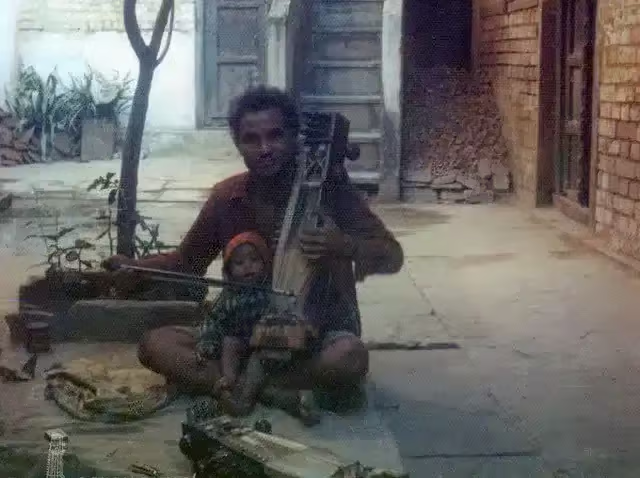
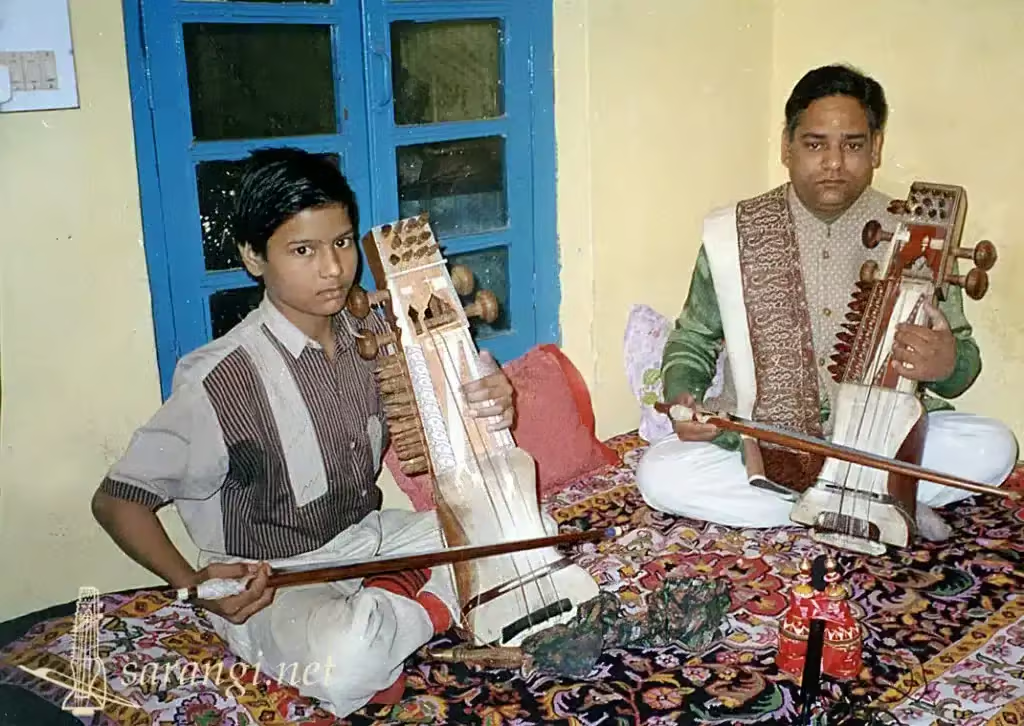
The sarangi, the main bowed stringed instrument of North Indian and Pakistani art music, is played mostly by hereditary professionals. Due both to the extreme difficulty of its technique and to the lingering stigma of its historical association with courtesan culture, the sarangi declined in popularity and in prestige throughout the twentieth century. Sarangi players, many of them demoralised, have been left behind by the mainstream. Hence their homes and lifestyles present a precious window through which to observe pre-modern approaches to musical pedagogy and attitudes regarding the relationship between music and life.
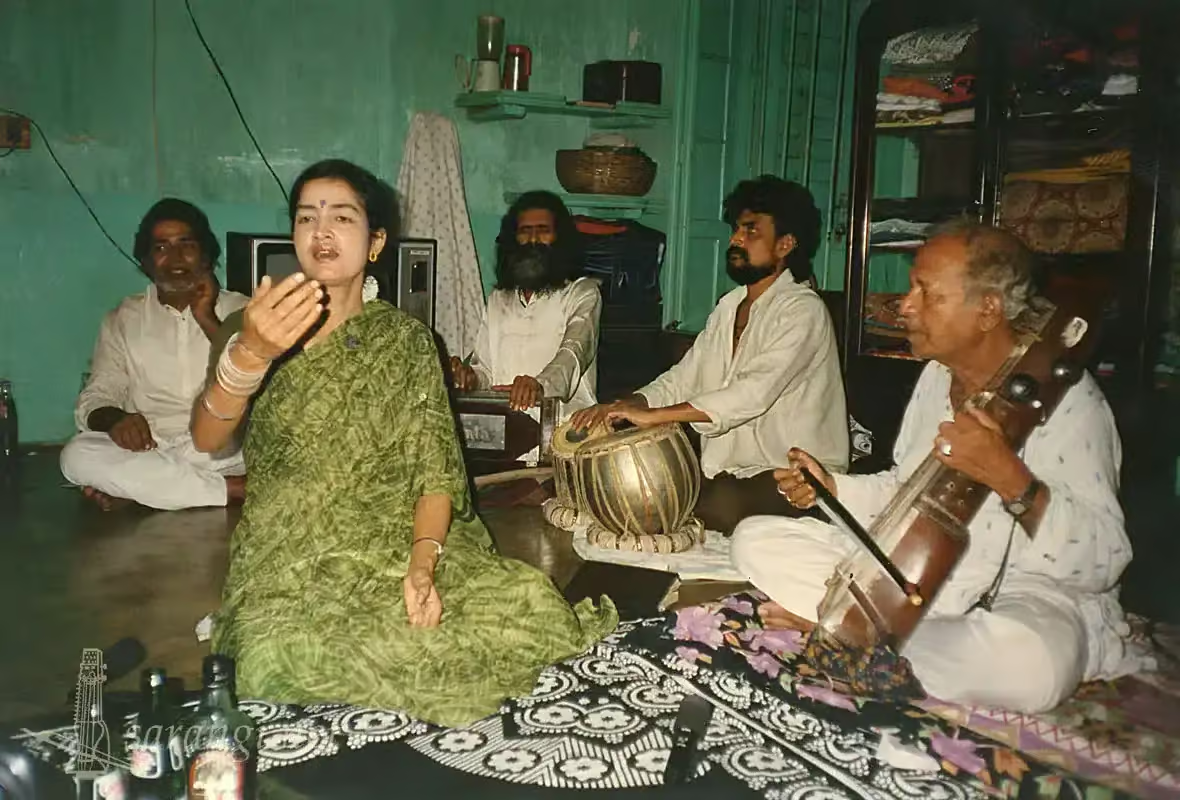
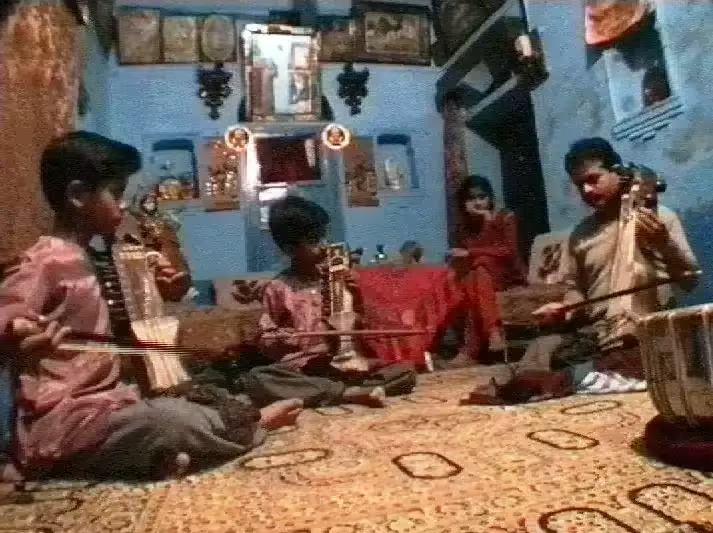
I started learning the sarangi in 1970 in Delhi and spent several years in India studying and practising sarangi and Hindustani vocal music. During the 1990s, in the course of my PhD research, I worked with over a hundred sarangi players in eighteen cities of North India. Already being a professional sarangi player myself and having developed considerable awareness of and empathy for the social plight of sarangi players, I had unique rapport with musicians. They welcomed me into their homes. The living environments depicted in my videos are unknown by the majority of modern Indian audiences—and even to most other musicians such as sitar players and vocalists, who often come from more middle-class backgrounds. In many ways my work reflects a subaltern approach to Hindustani music and its practitioners.
© Nicolas Magriel

© Nicolas Magriel
Many Western academics have engaged in learning South Asian music as a way to buttress their research and have usually taken the easy approach, the more academic route of learning music in music colleges or from musicians who, unlike most sarangi players, are educated and speak English. I have had the privilege of doing the majority of my music learning in the traditional way, sitting alongside my teachers’ children, learning by osmosis, playing along simultaneously, imitating. Many of the videos on sarangi.net were produced in this traditional learning situation. I am one of the participants, and the video camera sits passively on its tripod, generally forgotten and ignored.
© Nicolas Magriel
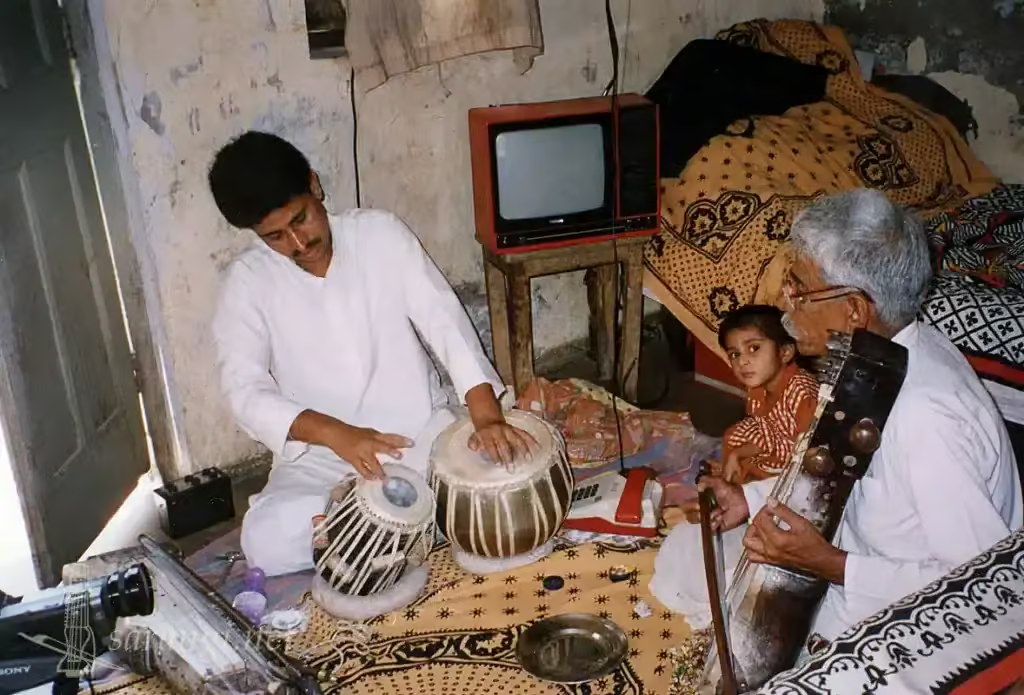

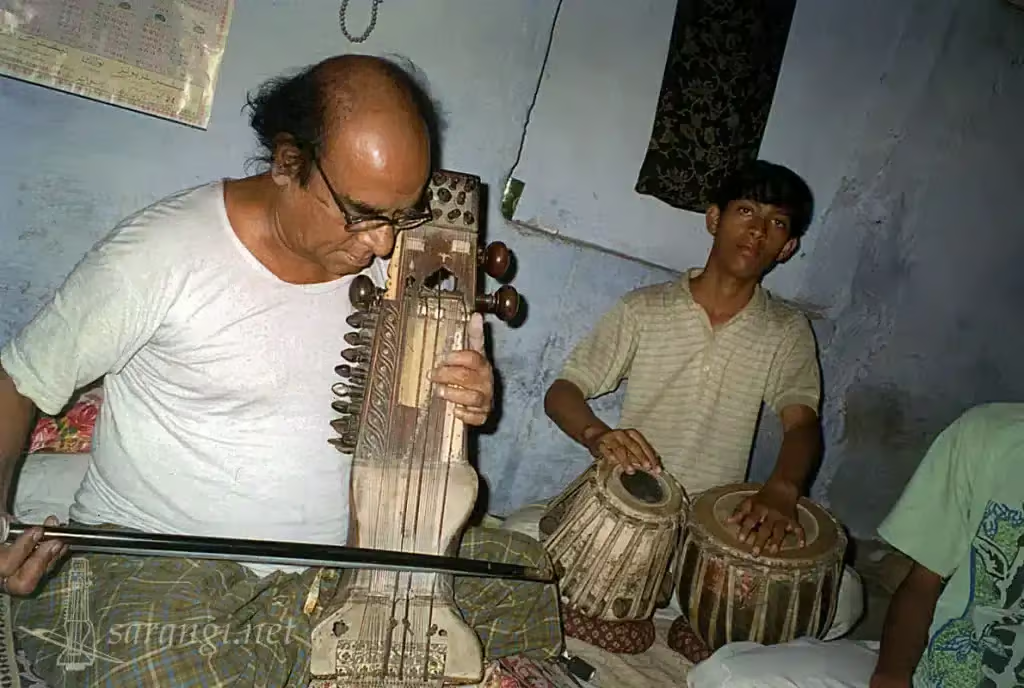
© Nicolas Magriel
During the 1990s, I accumulated several hundred hours of analogue video of nearly 100 sarangi players, all of whom populate sarangi.net. I digitised the videos and saved them to hard disks in 2008. Sarangi.net was born in 2014 as a video and audio archive and a tribute to sarangi culture. The site has been slowly growing ever since—when other work allows. The original video files have to be edited into individual raga performances, conversations, and home-life vignettes, which then need to be individually exported from the editing software, converted to an online-appropriate codec, uploaded to Vimeo and finally embedded on the sarangi players’ pages on the website and annotated. During the course of my Sempre award (July 2024 up to October 2025), I edited, titled, exported, transcoded, uploaded, embedded and annotated 303 new videos from the 1990s and a substantial number of more recent videos.
Sarangi.net is an unparalleled resource for scholars researching the music and life of the sarangi, the musical enculturation of children, and Hindustani music in general, from both musical and ethnographic perspectives. No other website gives any comparable insight into the home lives or pedagogical methods of Indian musicians. And of course this site is a treasure trove for sarangi players wanting to broaden their repertoires, expand their stylistic boundaries and learn new techniques. I have received much heartfelt appreciation from the community of sarangi players, both in India and Pakistan and in the West.
There is a lot left to be done—more videos to be worked on and uploaded—and existing videos on the site that need more detailed annotation. This is extremely time-consuming, at times tedious work, and I am still hoping for more assistance to complement the generosity of Sempre. I will complete this work; I owe it to the many sarangi players who welcomed me so warmly into their homes and musical lives. And almost all of those musicians, who were already survivors from a forgotten era, are now gone, but their memory lives on through sarangi.net.